Key Overview of the Eight Core Protections for Mine Hoists
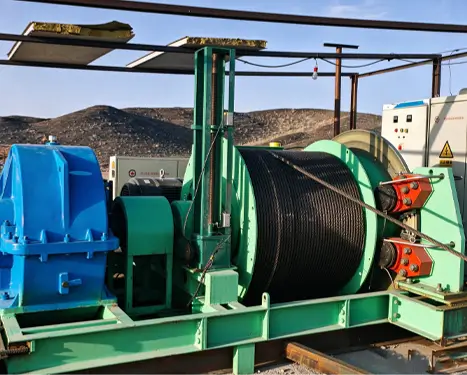
As the “critical equipment” of mining operations, the safety protection of mine hoists constitutes the fundamental baseline for their stable operation. In accordance with the requirements of the *Coal Mine Safety Regulations*, the eight core protection devices form the safety barrier of the hoisting system; the key points are as follows:
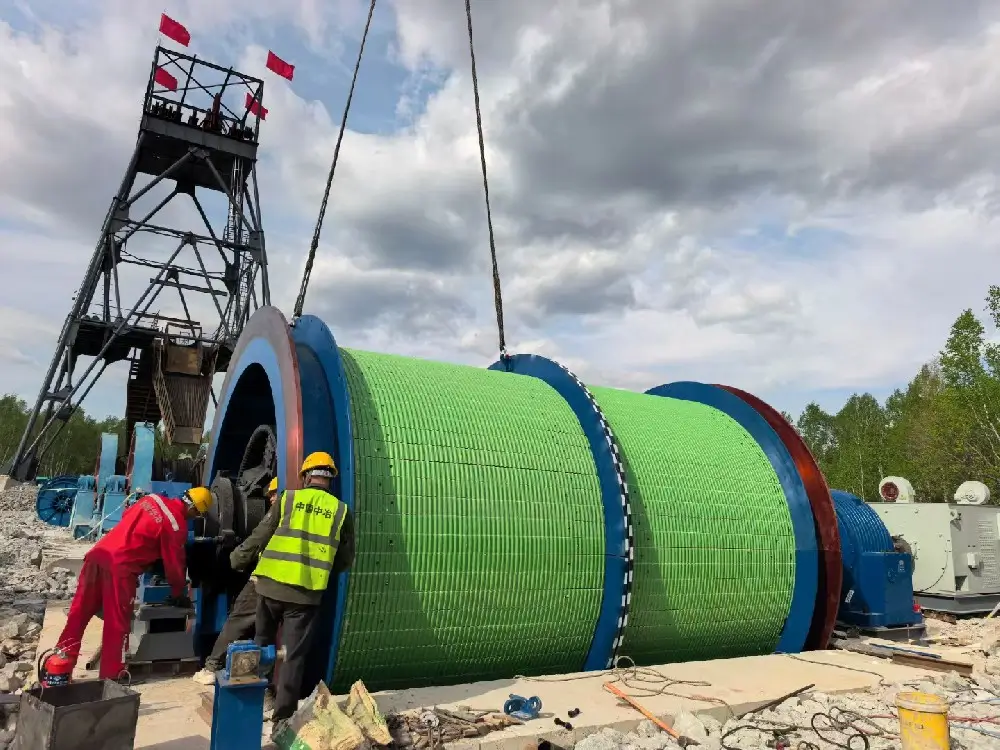
To mitigate the risk of containers exceeding the designated onshore and offshore terminal positions, high-precision position sensors shall be used for real-time monitoring; when a container exceeds the terminal position by 0.5 m, the main power supply shall be immediately cut off and a safety brake shall be activated. The device shall employ a dual-wire design to ensure reliable operation even in the event of a single-circuit failure.
The operating speed is collected in real time by a speed sensor; when the speed exceeds the maximum design speed by 15%, power is immediately cut off and safe braking is initiated. Friction-type elevators must also provide simultaneous anti-skid protection; mainstream equipment employs speed envelope control, combined with a dual-wire redundancy design to enhance protection reliability.
Overload: Real-time monitoring of the armature current enables immediate power disconnection and braking in the event of instantaneous severe overload or prolonged mild overload, thereby preventing motor burnout and damage to the drive system.
Undervoltage protection: When the supply voltage falls below the preset threshold, the power supply is rapidly disconnected to prevent the motor from experiencing insufficient power, difficult starting, or even stalling and burnout caused by undervoltage.
Applicable to hoists operating at speeds>3 m/s; the core safety mechanism ensures that when the container reaches its terminal position, its speed is ≤2 m/s. During the deceleration phase, if the speed exceeds the set value by more than 10%, power-off braking is triggered immediately, effectively preventing risks such as equipment ejection and wire-rope slippage or breakage in inclined shaft applications.
Monitor the gap between the disc brake shoes (the limit specified in the *Coal Mine Safety Regulations* is ≤2 mm); once this threshold is exceeded, an audible and visual alarm shall be triggered immediately, and the ability to start the machine shall be locked out, forcing the machine to stop for maintenance and thereby eliminating safety hazards caused by insufficient braking torque or braking delay.
Specifically designed for coiling elevators, the system uses sensors to monitor the tension status of the steel wire rope; when slack rope is detected, it rapidly activates the safety or alarm circuit. In bucket elevator applications, it additionally locks out the coal discharge function of the coal bunker, providing dual protection against steel wire rope rupture and bucket elevator fall accidents.
The coal bin level is monitored via a level sensor; when the bin reaches its upper limit, an audible and visual alarm is immediately triggered and the hoist’s start authorization is locked out, thereby preventing accidents such as wire rope slippage or breakage and bucket falls caused by incomplete unloading of coal from the bucket conveyor.
The operating direction is identified in real time by a direction sensor; if the actual direction differs from the set direction and the displacement reaches 0.3 m, power-off braking is immediately activated to strictly prevent serious accidents such as tank falls and runaway vehicles.
Core Supplement: The Importance of a Dual-Line Redundancy Design
To provide comprehensive protection against overspeed, overrunning, speed limits, and deceleration, an independent dual-circuit system must be installed, with each circuit serving as a backup to the other and operating without mutual interference. This should be complemented by auxiliary protection functions such as deceleration control and position indication, thereby establishing a comprehensive, enhanced safety protection system.
The eight major protective measures constitute the final line of defense for enhancing safe production in the system; it is imperative to ensure that all equipment remains responsive and reliable, undergoes regular calibration and maintenance, strictly adheres to operating procedures, and provides comprehensive safeguards for the safety of lifting operations.