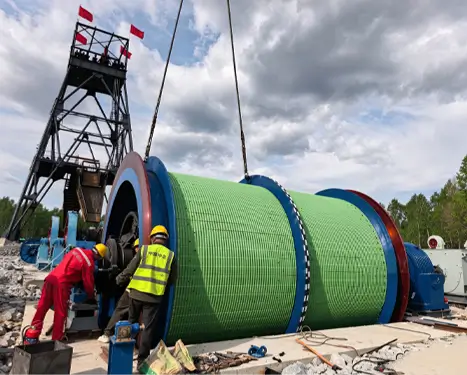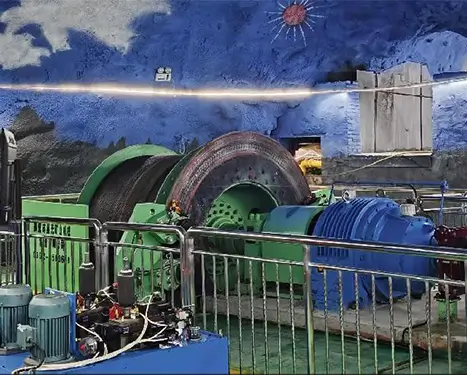
As demand for deep mineral extraction continues to grow, both friction-type and single-rope winding-type hoists have limitations in terms of suitability; multi-rope winding-type hoists are better suited for lifting operations in wells exceeding one kilometer in depth, which is of significant importance to the development of China’s mining industry.
Basic Principles and Technical Challenges
Steel wire rope is a primary component of mine hoists; it operates in a complex environment, over long transport distances, and is subjected to bending and alternating loads. Due to the harsh operating conditions—prolonged heavy-load operation, coiling, and physical impacts—steel wire ropes are prone to damage such as fatigue-induced wire breakage and wear. When wire breakage and wear reach a certain threshold, the entire steel wire rope can easily fracture, resulting in significant loss of life and property. Therefore, to effectively prevent steel wire rope breakage accidents, there is an urgent need to develop online detection methods for defects in mine steel wire ropes.
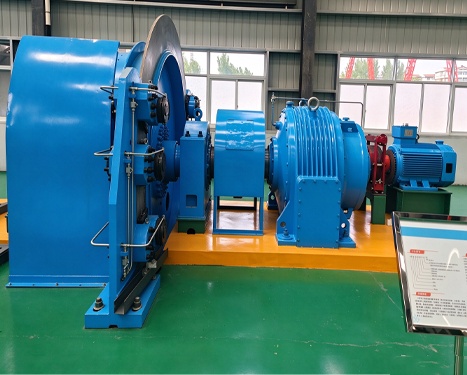
Consequences of Asynchronous Operation of Steel Wire ropes
Asynchronous operation of steel wires can create tension differentials; in severe cases, a single steel wire may bear the entire load, causing the container to tilt and resulting in abnormal damage to the steel wires, thereby exacerbating safety hazards.
Factors Affecting the Asynchronous Operation of Steel Wire Ropes
These primarily comprise four categories: first, differences in the diameter of the steel wire rope, which affect the winding radius; second, deviations in the winding diameter between the two rope-winding zones of the drum; third, differences in the elastic modulus of the steel wire rope, resulting in varying elongation under load; and fourth, incorrect winding, which can sharply exacerbate asynchrony, necessitating specialized design and monitoring equipment for mitigation.
Steel wire rope synchronous automatic compensation device
To address the issue of desynchronization, a synchronous automatic compensation device must be installed; two common approaches are used:
- Floating top wheel: Tension balance is achieved through hydraulic cylinders and a communicating vessel; its advantages include no reduction in lifting capacity and ease of maintenance, while its disadvantages include sluggish operation in deep-well applications and large equipment dimensions; currently, research is underway to optimize the closed-loop control system.
- Automatic wire-rope tension balancing device: It uses hydraulic balancing to adjust tension; its drawbacks include the need for travel compatibility, reduced effective load capacity, and inconvenient maintenance.
Conclusion
Multi-rope winding hoists are well suited to the lifting requirements of deep wells; however, existing synchronization devices suffer from insufficient compatibility. Consequently, the design of synchronization compensation devices should be further optimized to facilitate the safe and efficient development of deep mineral resources.