Overview
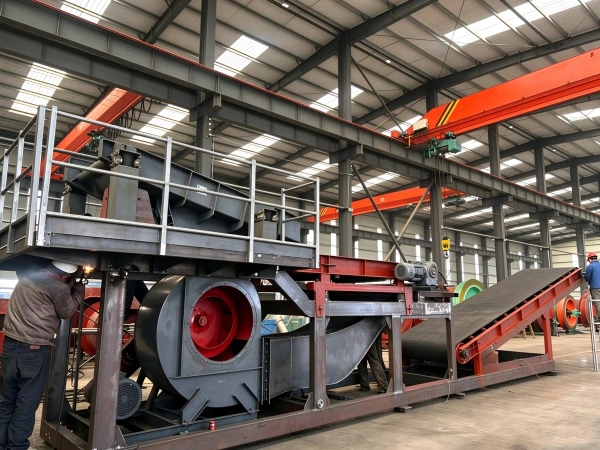
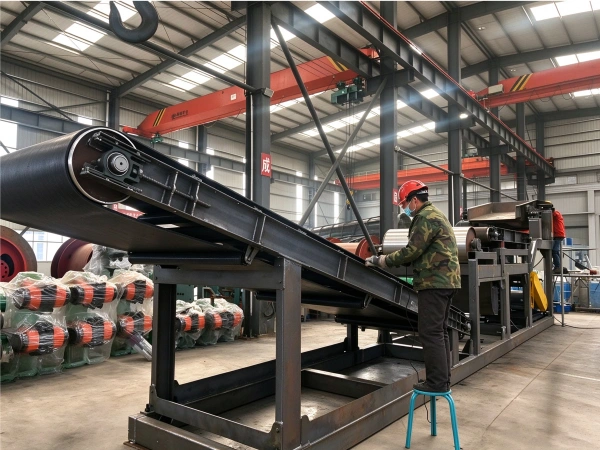
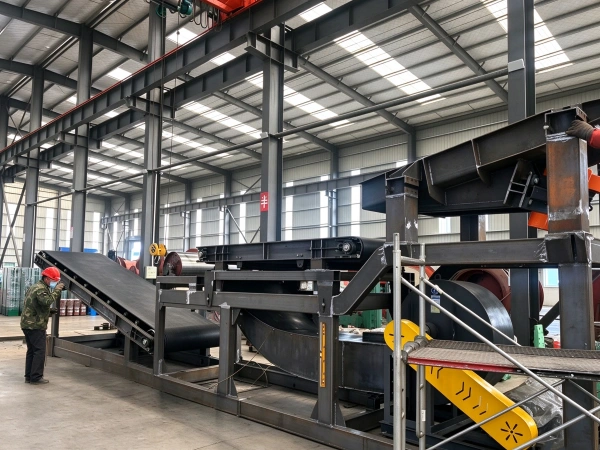
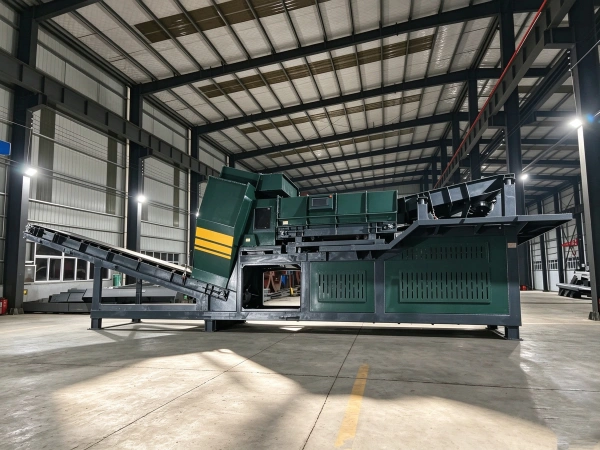
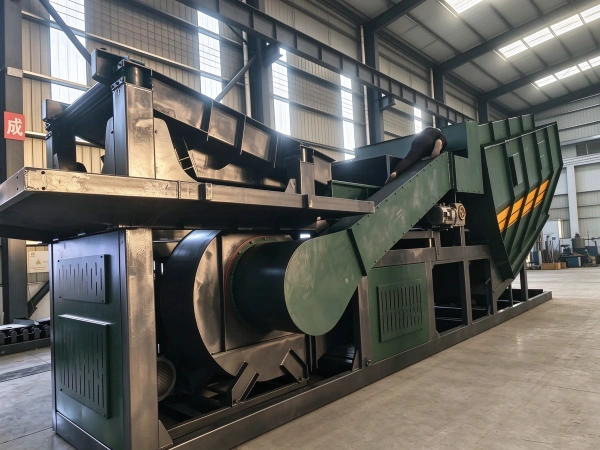
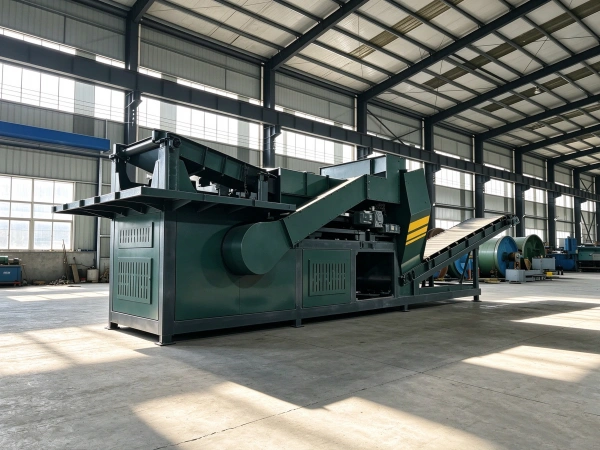
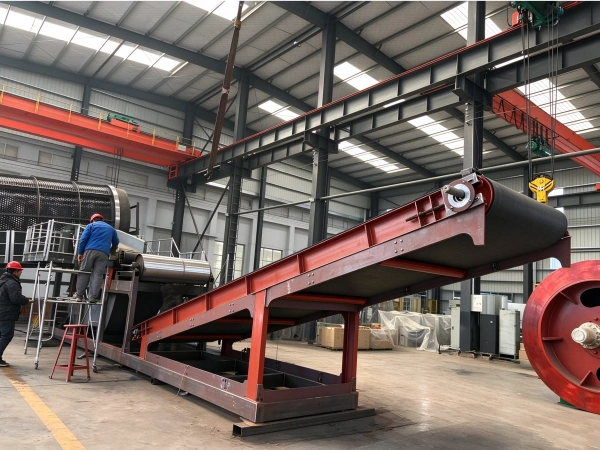
An air classifier primarily consists of components such as a circulation fan, a separation drum, a conveyor, a diffusion chamber, and a dust collector. The device operates on the principles of aerodynamics, using a controllable airflow as the sorting medium. It separates materials according to their density and particle size: lighter impurities, such as paper, plastics, dry leaves, and down, are carried upward or horizontally by the airflow, while heavier materials fall downward under the influence of gravity; the settling process is completed through inertia, thereby achieving efficient separation of light and heavy materials.
Operational Principle
Core Advantage
Compared with traditional manual sorting, integrated air classifiers offer higher efficiency. They effectively separate lightweight contaminants from materials that are difficult to sort manually, ensuring that heavy contaminants—such as recycled metals—have low impurity content and high purity. The separation rate for lightweight materials can exceed 90%.
Modern air separators typically employ a negative-pressure design or an internal circulating airflow system. During operation, the airflow circulates within the equipment, preventing dust from escaping. Using a cyclone filter or bag filter, dust is concentrated, settled, and discharged, significantly improving the working environment.
The equipment typically features a modular design, resulting in a compact footprint and reduced space requirements. Since it primarily relies on airflow for operation, it has fewer wear parts and lower maintenance costs. In addition, the system is usually integrated into a single unit, making installation straightforward—operation can begin simply by connecting the power supply on site.
Features
- Excellent separation performance | High flexibility | Adjustable negative pressure/airflow
- Fully leverage aerodynamics to achieve superior separation of lightweight and heavy materials.
- The angle of the material conveying conveyor and the air nozzle can be adjusted within a 90° range, providing high flexibility and strong adaptability.
- The expansion chamber operates under a negative-pressure environment, enhancing the separation effect between the lightweight material and the air.
- The fan separator is equipped with airflow and pressure control valves, allowing flexible adjustment of the airflow to the nozzles and dust collector.
Parameter
| Parameter Item | Typical Specification | remarksRemark |
| Processing capacity | 10–50 t/h | Visual materials |
| Fan Power | 11–45 kW (variable frequency adjustable) | |
| Air Flow Regulation | Variable frequency, continuously adjustable | |
| Power Supply | 380V / 50Hz (60Hz available upon customization) | |
| Key Features | Separation of lightweight and heavy materials; adjustable air ducts; reserved negative-pressure dust collection interface | |
| Applicable Materials | Separation of light and heavy fractions in municipal solid waste (membrane/paper/light impurities vs. heavy solids) |