Overview
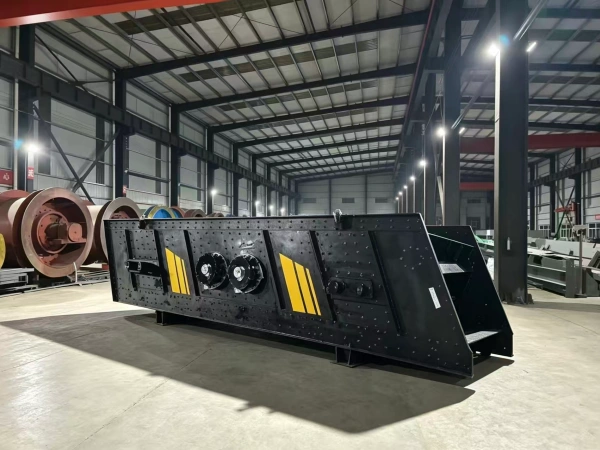
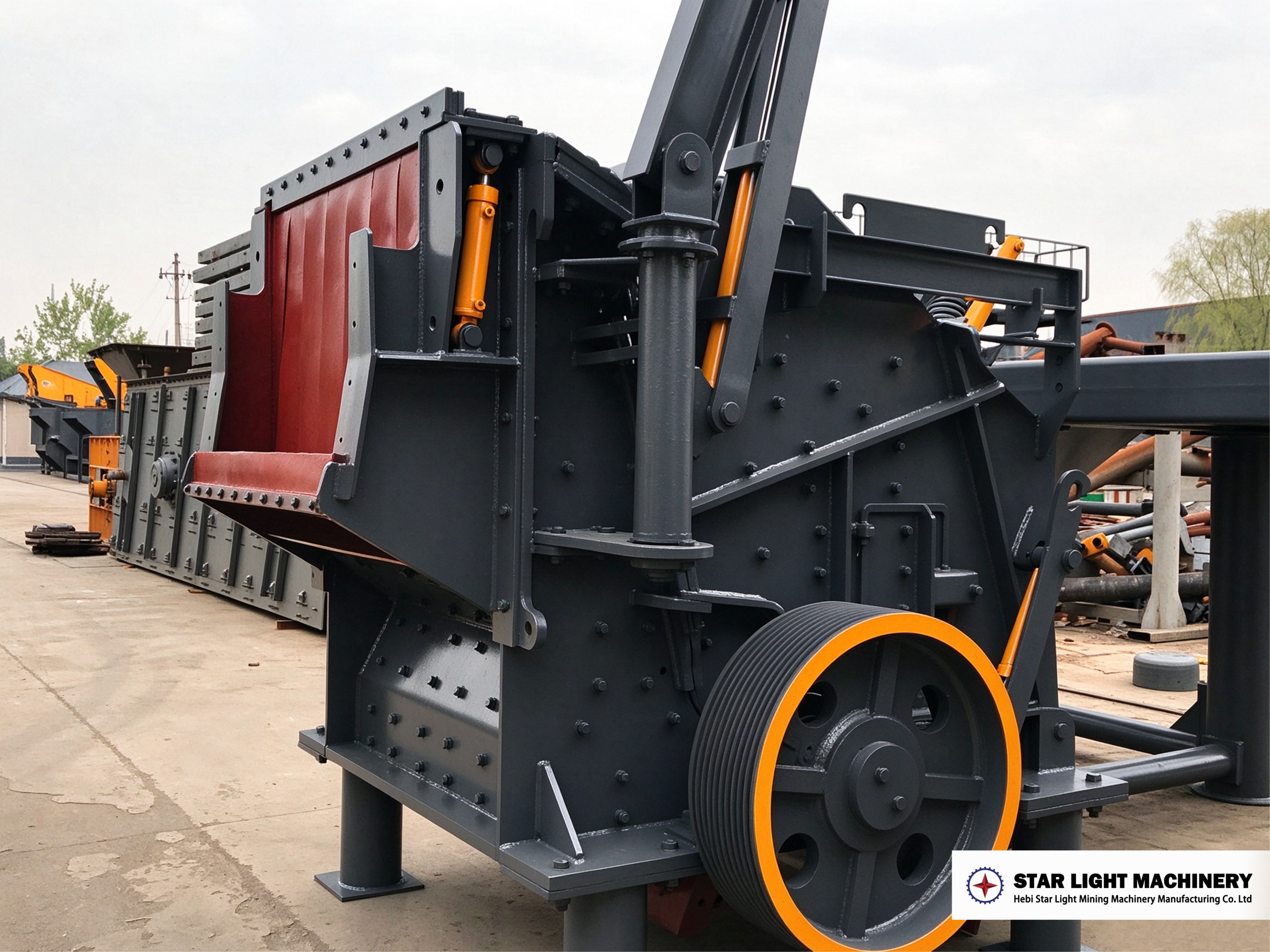
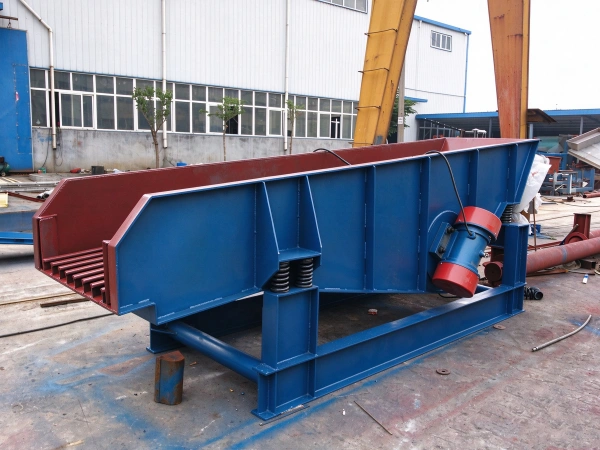
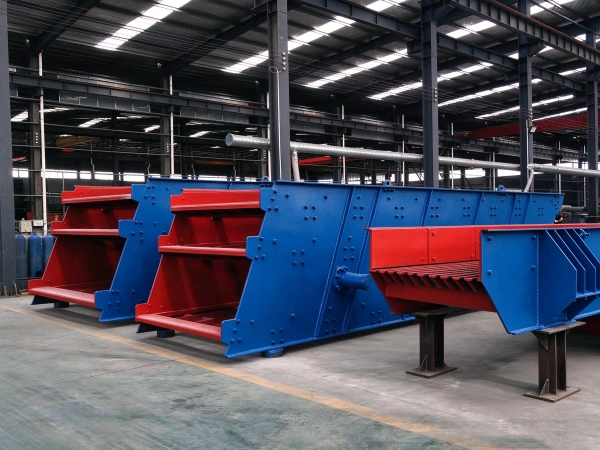
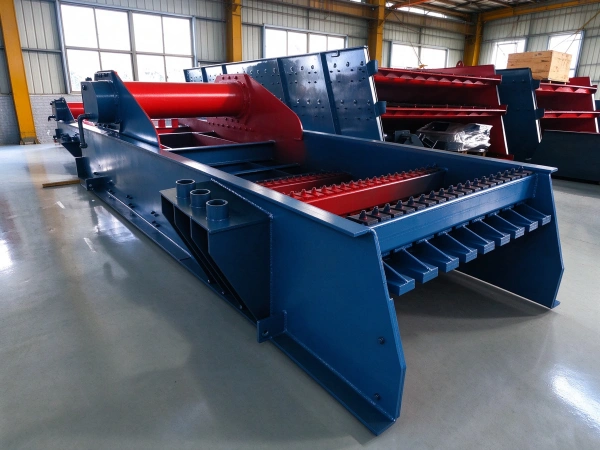
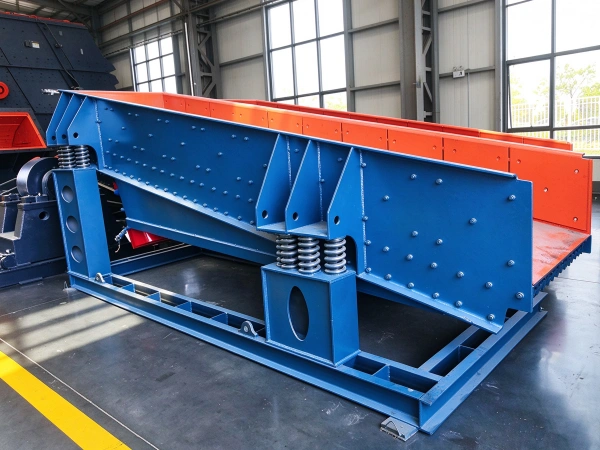
As a key front-end component in waste sorting systems, vibratory feeders are widely used for the processing of construction waste, household waste, and compostable waste. They ensure uniform and continuous material feeding while simultaneously removing initial impurities and homogenizing the material, thereby providing a stable feedstock for downstream sorting operations.
Operational Principle
The system employs a dual-mass forced-vibration elastic system.
Motor type: A vibration motor drives the eccentric block into rotation, generating centrifugal force that causes the groove to vibrate.
Electromagnetic type: The electromagnetic coil generates pulsed electromagnetic force, which drives the slot at a high frequency, producing reciprocating vibration at 3,000 cycles per minute.
When the vertical component of the vibrational acceleration exceeds the acceleration due to gravity, the material is propelled upward, producing a slight forward motion.
Features
Features
- Excellent separation performance | High flexibility | Adjustable negative pressure/airflow
- Fully leverage aerodynamics to achieve superior separation of lightweight and heavy materials.
- The angle of the material conveying conveyor and the air nozzle can be adjusted within a 90° range, providing high flexibility and strong adaptability.
- The expansion chamber operates under a negative-pressure environment, enhancing the separation effect between the lightweight material and the air.
- The fan separator is equipped with airflow and pressure control valves, allowing flexible adjustment of the airflow to the nozzles and dust collector.
Parameter
| Parameter Item | Typical Specification | remarksRemark |
| Equipment Model | GZD-960×3800 / GZD-1100×4200 / GZD-1300×4900 | Select equipment based on production line capacity |
| Processing capacity | 120–500 t/h | Depending on the material and machine model |
| Maximum feed size: Max Feed Size | ≤500–750 mm | |
| Motor Power | 2×3.7–2×7.5 kW (vibration motor) | |
| Power Supply | 380V / 50Hz three-phase (220V,440V, and 60Hz available upon customization) | Some countries in the Gulf use 60 Hz. |
| Installation Angle | 0°–10° (adjustable) | |
| Trough Material | Q235 wear-resistant steel plate; wear-resistant plate lining available | |
| Key Features | Dual eccentric exciter, adjustable amplitude, uniform feeding, and anti-clogging design | First feeding stage of the entire line |
| Applicable Materials | Construction waste, renovation waste, household waste, ore |